Months ago, I signed my husband and I up for this hike the moment I saw it posted in the Keystone Trails Association (KTA) newsletter. The day came and as it turned out, the hottest day this far in 2025.
And the hike? This was going to be a 3 to 4 mile hike on a documented segment of the Underground Railroad, a network that aided freedom seekers escaping enslavement. We would be walking a pilgrimage on a gravel road that would have been no more than a wagon trail in the early to mid-1800s.
We begin near Drumore, a small community along the Pennsylvania border. Its location is historically significant with close proximity to the Susquehanna River.
We meet in what is now a nature preserve and are joined by KTA’s collaborators in this hike, the Lancaster Conservancy, the African American Historical Society of South Central Pennsylvania and LancasterHistory. While we walked this gravel road, we learned from these groups how freedom seekers would have experienced this segment of trail enroute to safer destinations.
We began at a fork in the path walking the first section where the African School had been located, the area now covered in dense Pennsylvania foliage with some steps barely visible. In the 1800s, a number of free blacks, farmers, laborers and tradespeople lived in this rural area and their children would have attended this school.

We learn that this section of trail, so close to the Mason Dixon Line, would have become a difficult stretch for freedom seekers. Many would have crossed the Susquehanna River, arriving by ferry operated by a free black man whose name is not known. They would likely have been directed to the Joseph Smith house (16 on the map below).

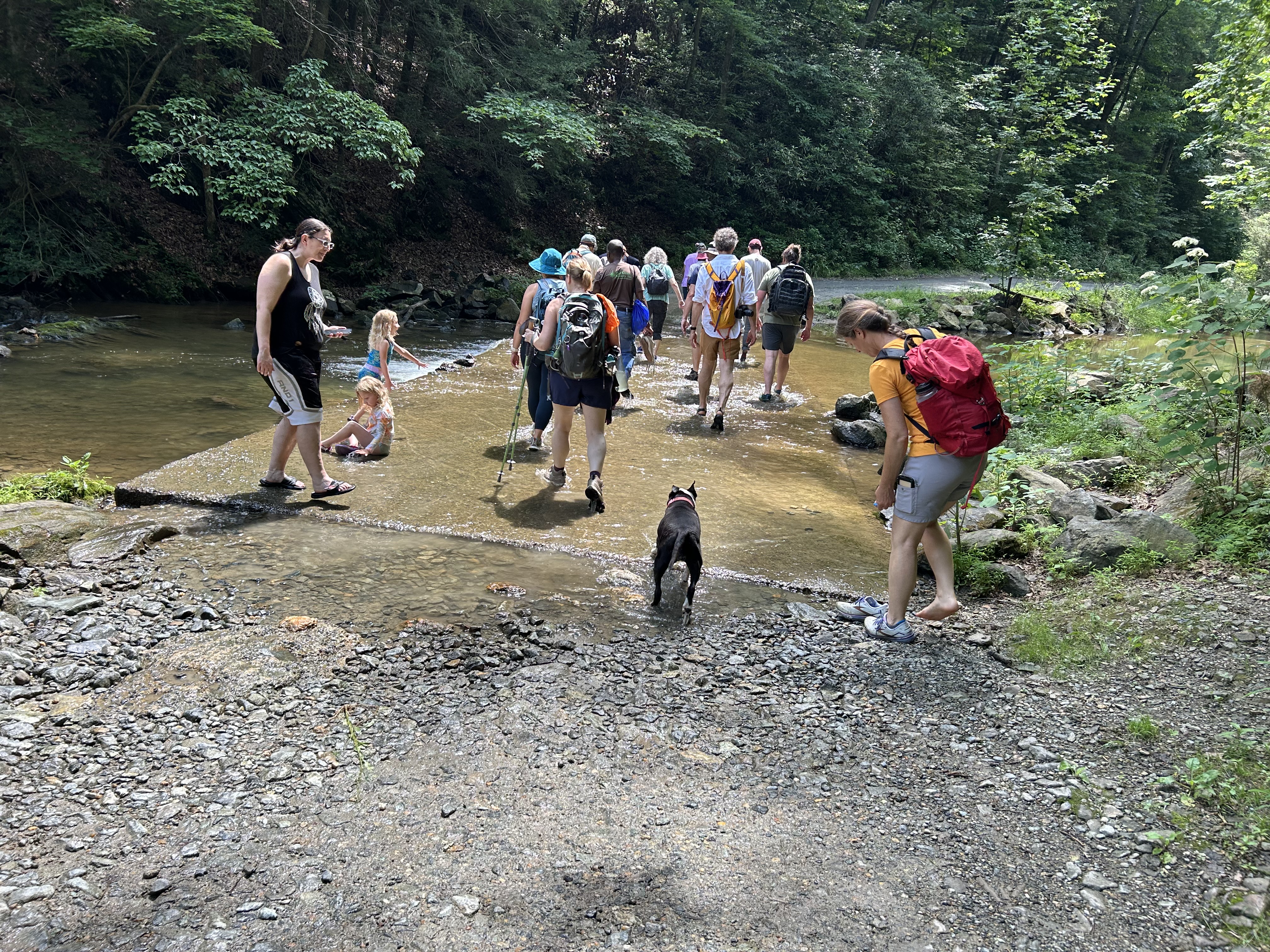
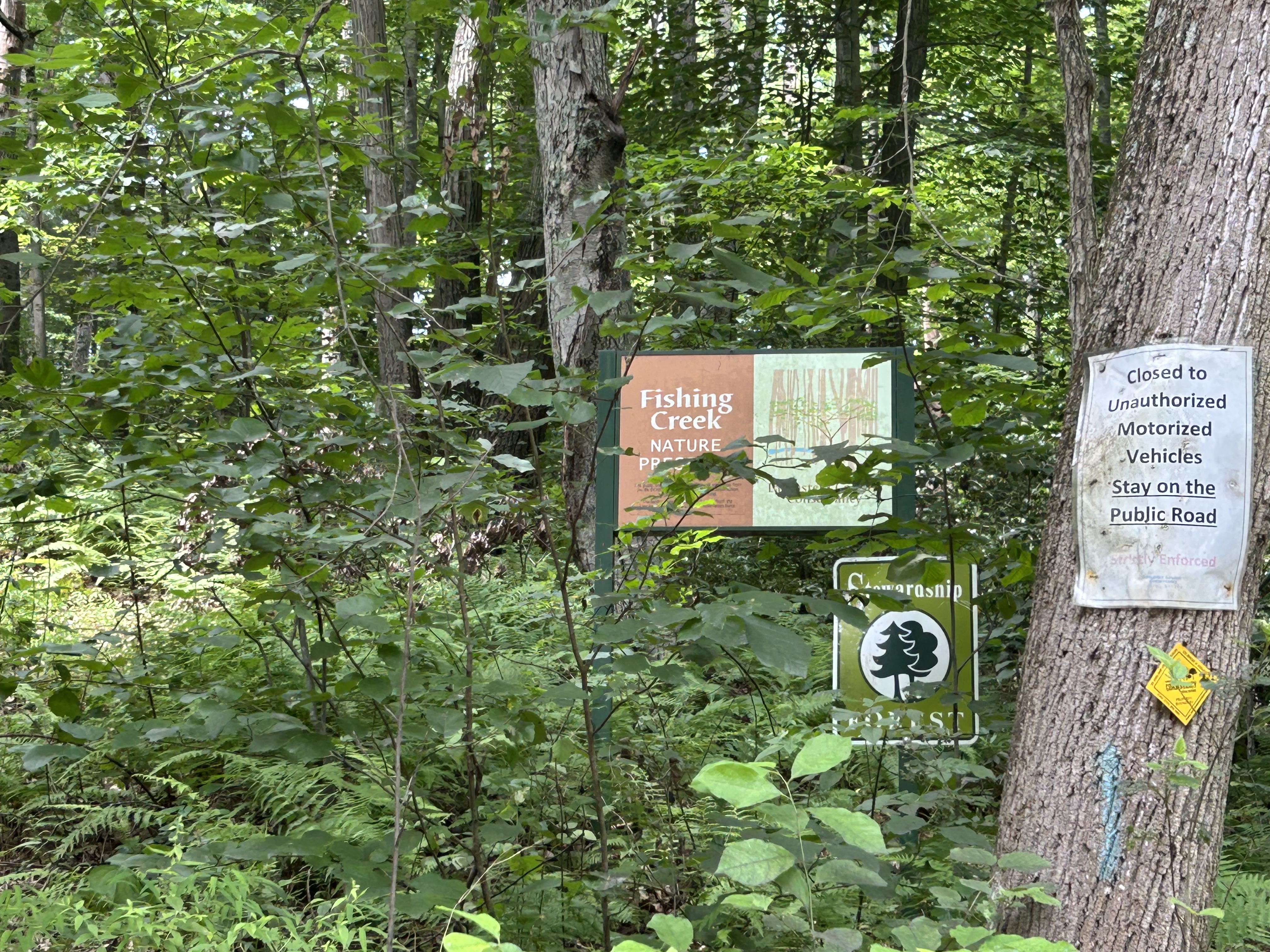
We continue our pilgrimage through the area now in the Fishing Creek Nature Preserve. There are three stream crossings to be straddled, done easily enough, no more than ankle deep or so. This path with Fishing Creek meandering back and forth would have provided additional benefit to freedom seekers. Bounty hunters with dogs would have lost the scent as those seeking freedom as they crossed the stream multiple times.
As we walk onward on this sweltering day, I try to imagine the difficulty of attempting to be avoid capture while battling extreme heat and humidity as this day brought, never mind the insects. I have my wide-brimmed hat (which I have dunked in the creek several times), hiking boots, insect spray, sunblock and fresh bottles of water. The freedom seeker would not have had most of that protection.





What they did have is the assistance of people who lived in the area, mostly coming from the free black, Quaker and abolitionist communities. To endure this journey, help in the form of a meal, an occasional resting place, perhaps clothing, direction to the next safehose, and most importantly, information regarding dangers that lay ahead.
The Underground Railroad network was important for survival through this critical section of their journey, particularly after the 1840 passage of the Fugitive Slave Act. After its enactment, freedom seekers weren’t truly safe from recapture until they passed into Canada. That Pennsylvania was a free state was no longer pertinent, “Owners” of the enslaved could arrange for capture and compel the return of their “property” from anywhere in the country.
We learned about the elaborate scouting that was done both by bounty hunters and by abolitionists. Along this stretch, scouts were keeping an eye out to warn freedom seekers of danger ahead, and when to divert to a safer alternate route. Other spy networks were active as owners and bounty hunters got intelligence from locals unfriendly to the abolitionist movement.
This day close to 200 years later, the only scouts I see are those looking for the best fishing spots and locations for children to play in the creek. It is a beautiful stretch of trail and creek, likely hiding many secrets. I stop for a moment to appreciate the sound of the stream.
Our hike ended at Drumore Park with a delicious picnic lunch and additional discussion provided by the African American Historical Society. A day well spent. These several days later, I’m still processing the wealth of information we received. Thanks to all the organizations involved.
I understand KTA had a long waitlist for this hike. If you’re interested in this and other interesting hikes and programs anywhere near Pennsylvania, check out their website or sign up for their newsletter.
Keep running and keep hiking You never know what you might learn.
 Still a Runner