We’re traveling to Soissons today and spending Tuesday, May 12 and Wednesday, May 13. After a too fast turnaround in Chalons en Champagne, I’m thankful for an extra day to get my bearings. And I am doubly thankful for the incredible experience I simply walked into. I will save (and savor) that for last. First, let’s talk about the Dauphine.
Marie Antoinette’s Stay and Accommodations in Soissons
On arrival in Soissons, rhe Dauphine was greeted by crowds with garlands of flowers in her path. Her lodging was the Palais Episcopal, the Bishop’s Palace adjacent to the Soissons Cathedral, also known as Cathédrale Saint-Gervais-et-Saint-Protais de Soissons. Historically, this is the third version of the cathedral at this location, the original built on a Roman foundation.
The Bishop’s Palace located adjacent to the cathedral no longer exists. In its place is a public garden.
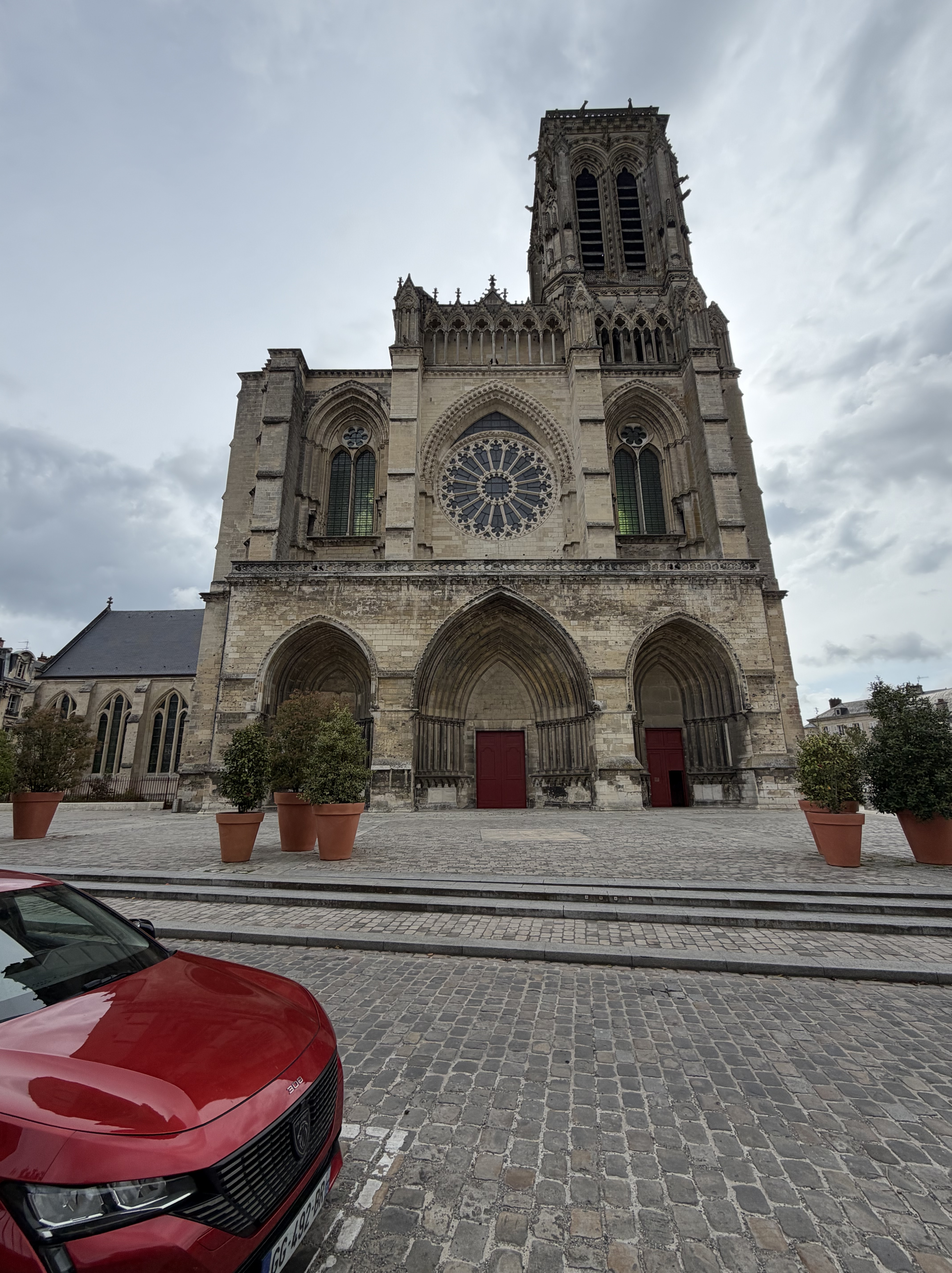
Marie Antoinette was given a day of rest here. I’m thankful to her schedulers. Before I would take leisure time during this two-day stay, I explored this lovely cathdral. The interior is immense with smaller chapels.
This is a cathedral clearly still an integral part of the Soissons life. In this mid-morning hour, a few parishioners were individually having a quiet moment of prayer. There is an unobtrusive kiosk where small statues and devotional items can be purchased.
My Accommodations and Experiences in Soissons
What was I thinking when I made this reservation? When I plotted out this journey, I booked all of the stays in inns or hôtes close to the train stations. While I did make longer treks in some cities, this 1 1/2 mile walk took me out to a suburban area close to a main highway.
My stay was the Ibis Soissons, a cheerful and agreeable hotel for a chain, with a wonderful staff. I may have been the only touristy-type person there as most of the guests where business travelers, on their phones or with papers and laptops spread out in the coffee area.
Leaving suburbia and the business travelers behind, off I went to find the Soissons that Marie Antoinette may have seen. I could have taken a bus or a cab, but I chose a good morning ramble, finding my way around through the rain. It did leave me a bit bewildered, then I was able to locate the Soissons Cathedral where Marie Antoinette would have stayed in the adjacent palace at the time. From there I continued through the city through Place Dauphin and on to Boulevard Jeanne d’Arc where I would find:
Abbaye Saint-Jean-des-Vignes, Soissons.
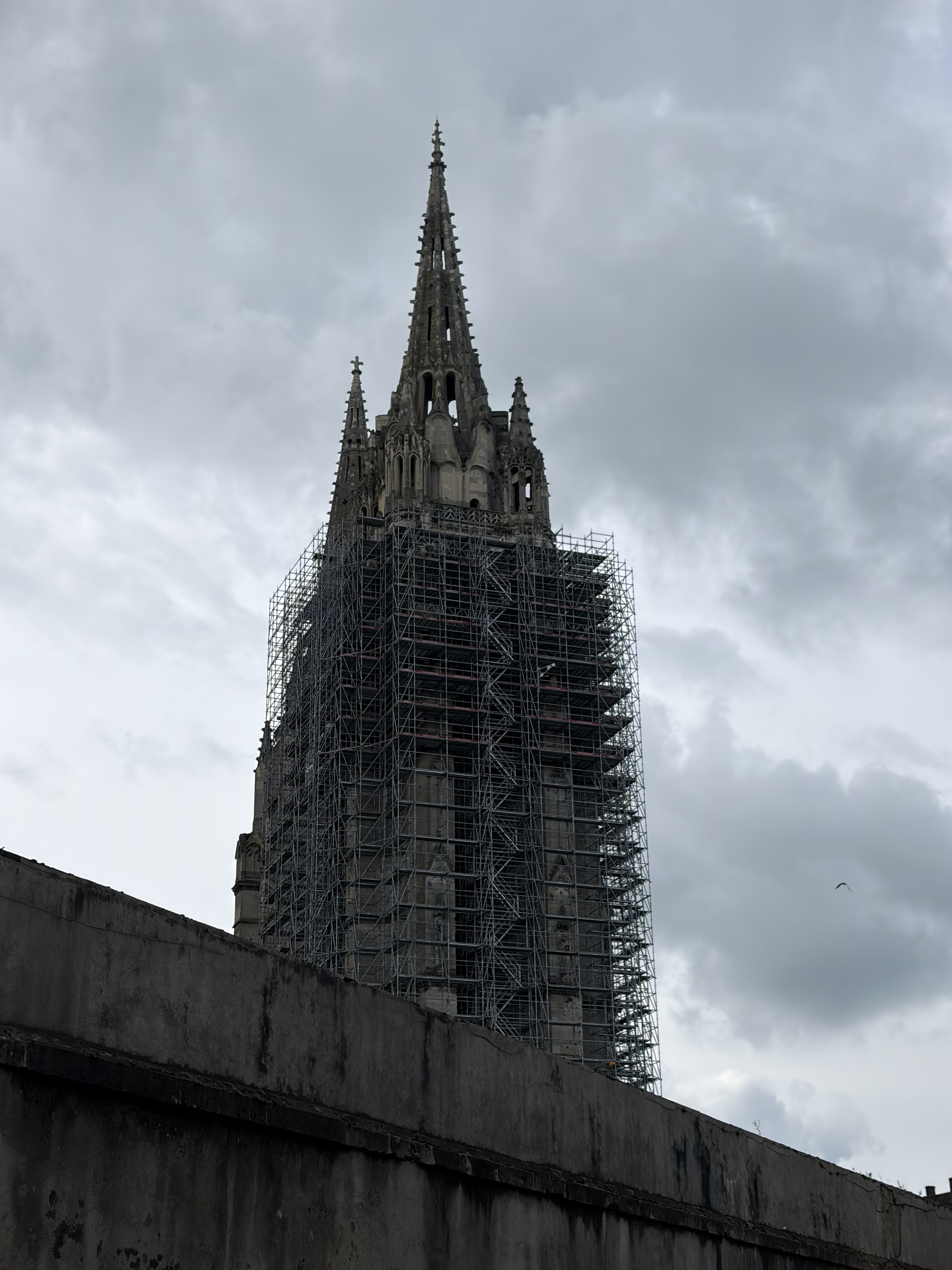
And here is where I experienced an incredible sight. In wandering around the flower garden of the abbey where what is left of it is being restored, a woman was taking a cigarette break outside of a building labeled as an archive.
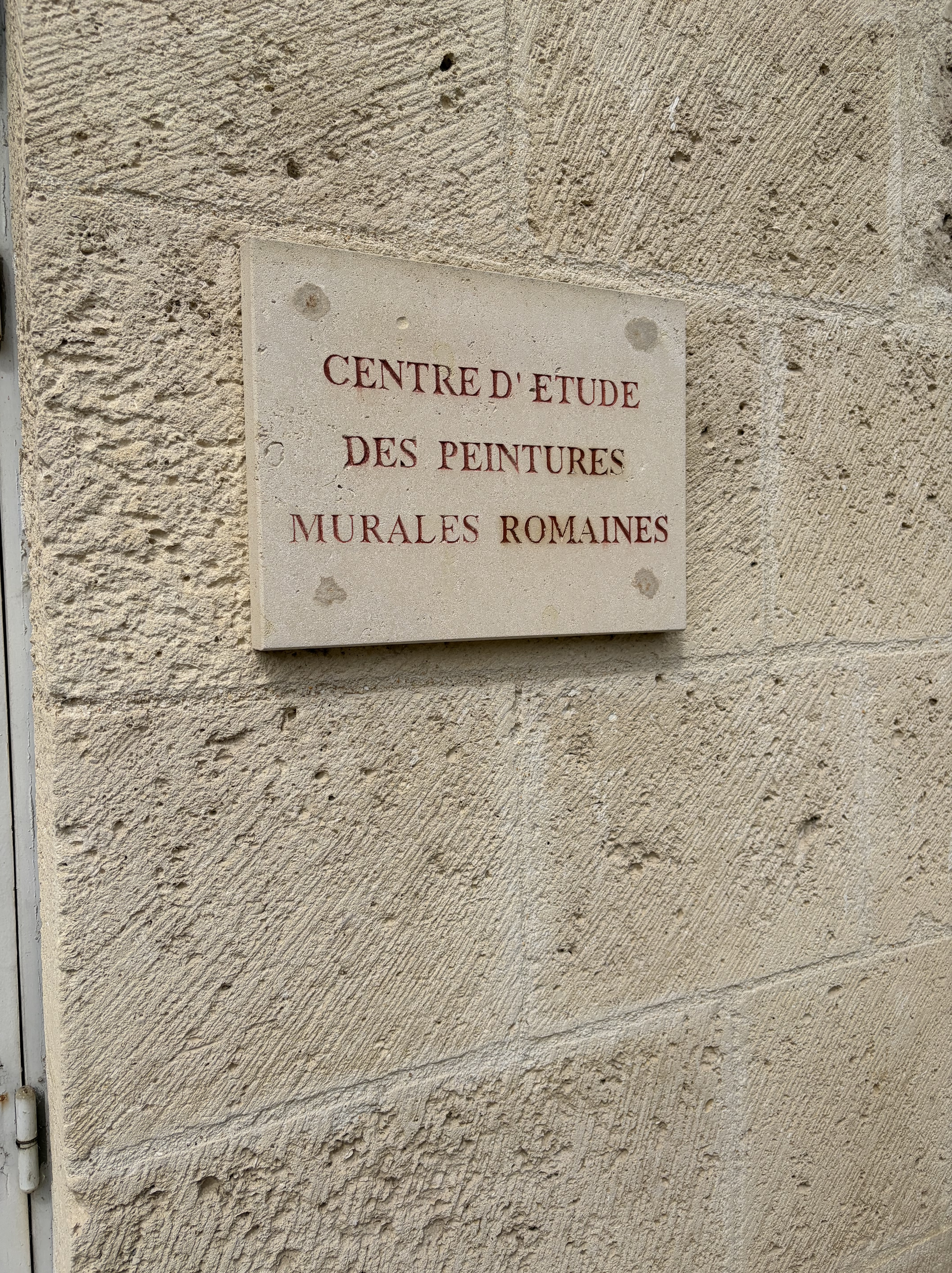
We talk for a moment, her asking what brings me to the abbey. I explain my interest in Soissons as one of the stops of Marie Antoinette on her bridal journey. She offers that she is an archeologist, one of four archeologists in France working with ancient ruins. She calls her work a ‘puzzle’ and asks if I would like to see. Well, bien sûr.
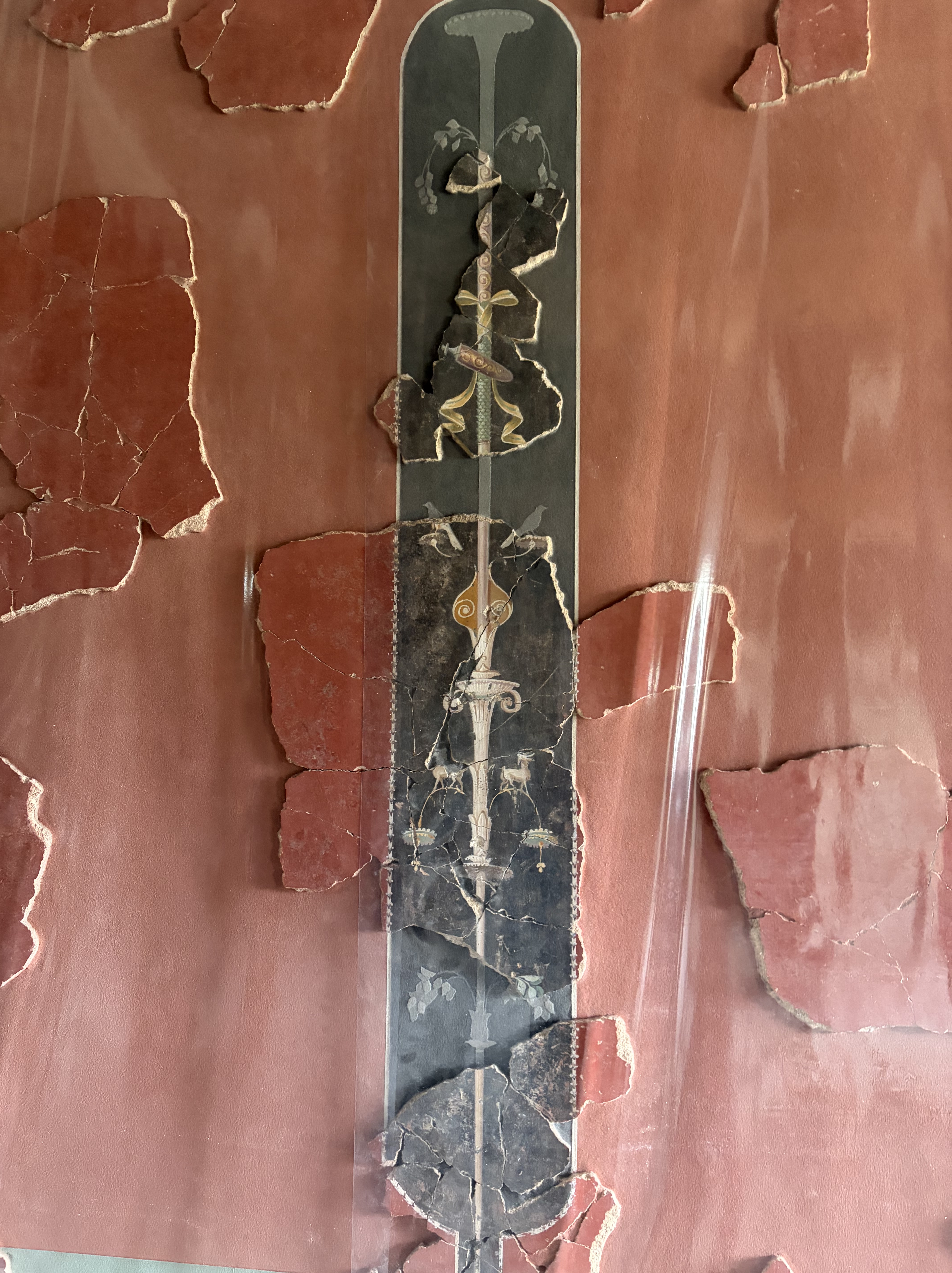
The archeologist leads me into the building and up a stairs to a room filled with multiple tables where what look like small shards of stone or glass or ceramic are stacked in mounds. We then go to another room to her specific work space. On her table are pieces of artwork that have been reassembled from the thousands of tiny pieces, I don’t know what. She tells me the creation dates to 2,000 years before Christ. I couldn’t fathom it and repeated her worlds back to her. “Deux mille ans avant Christ?” Oui, deux mille ans avant Christ.
I ask who has seen these. She tells me only the archeologists who continue to work on them. My mini-tour over, she then leads me back outside. I leave her with a milles fois merci and au revoir. Walking away from the building, I ask myself if that just happened.
Back in my room, I looked at my photos – yes, it did happen. I had asked for permission to photo her ‘puzzle’ thus far completed and she agreed.
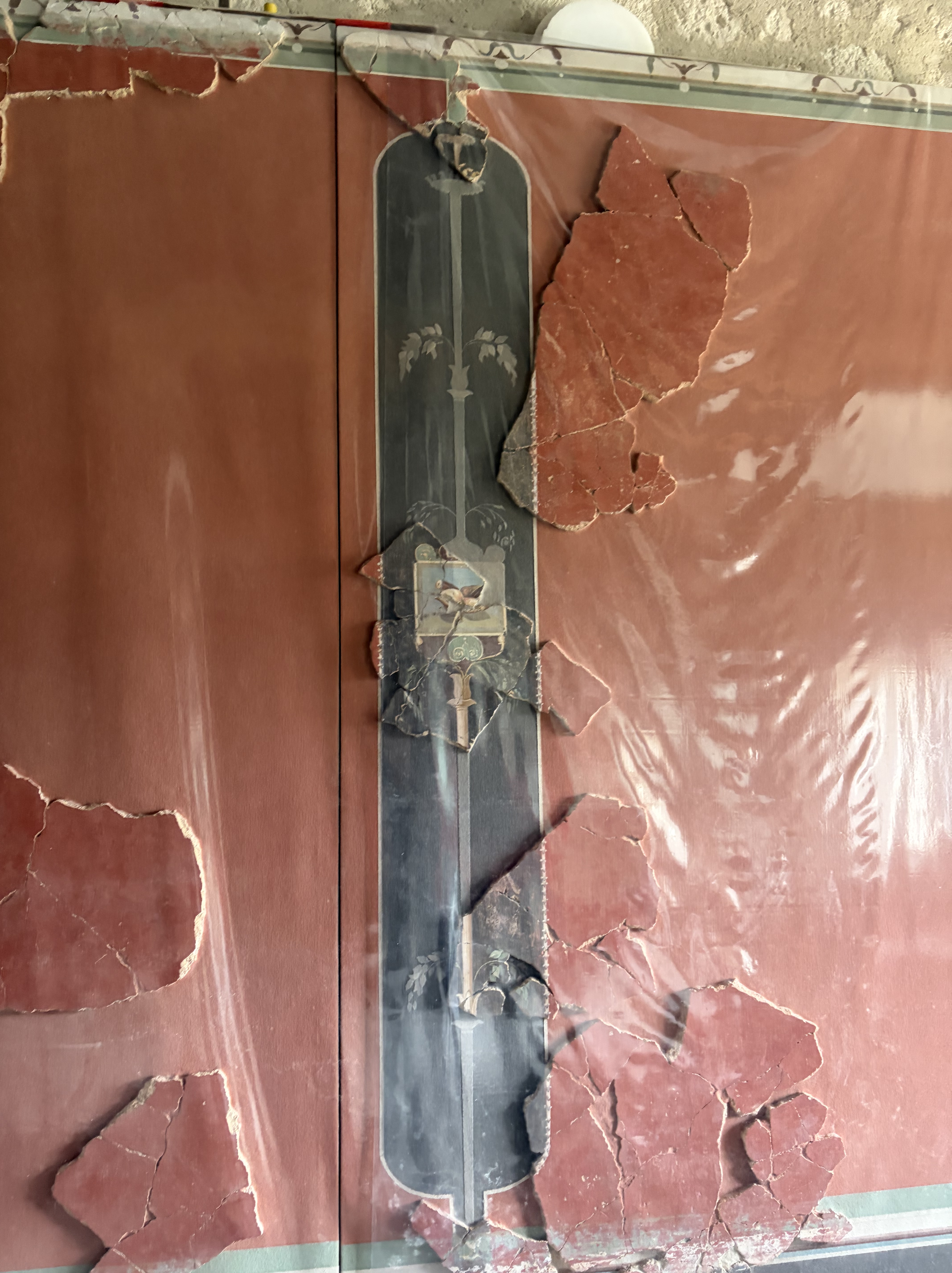
Now that I’ve gushed about my adventure into ancient ruins, let me tell you more about the Abbey where this archive building and its work are housed.
The Abbey of Saint-Jean des Vignes and what is left of the abbey grounds is finally getting some loving care. Founded as an Augustinian monastery in 1076, it grew in wealth and size. Then, during the French revolution much of it was dismantled and sold for stone. The portions remaining are western facade and the bell towers. It is now being preserved as an historic ruin.
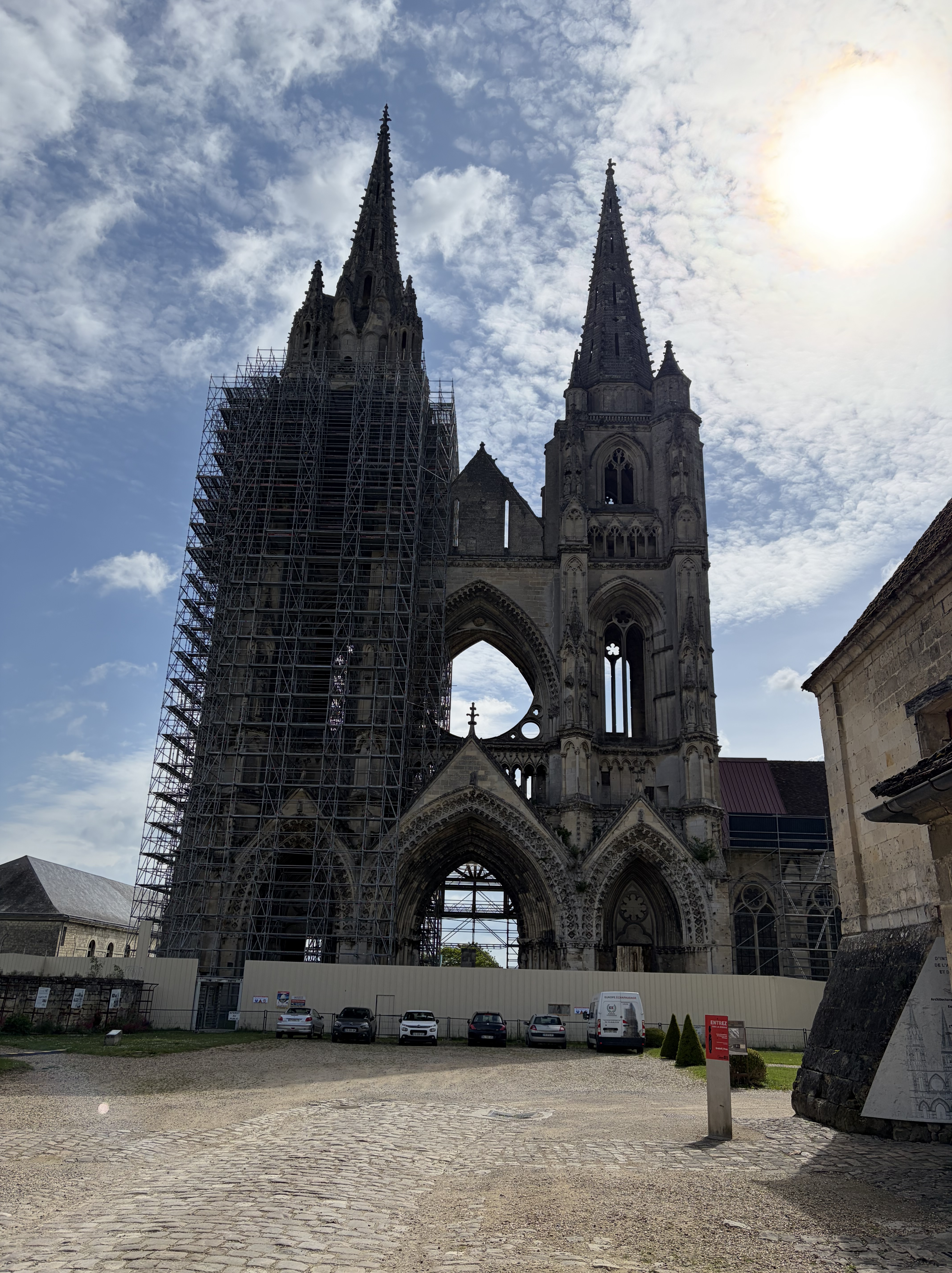
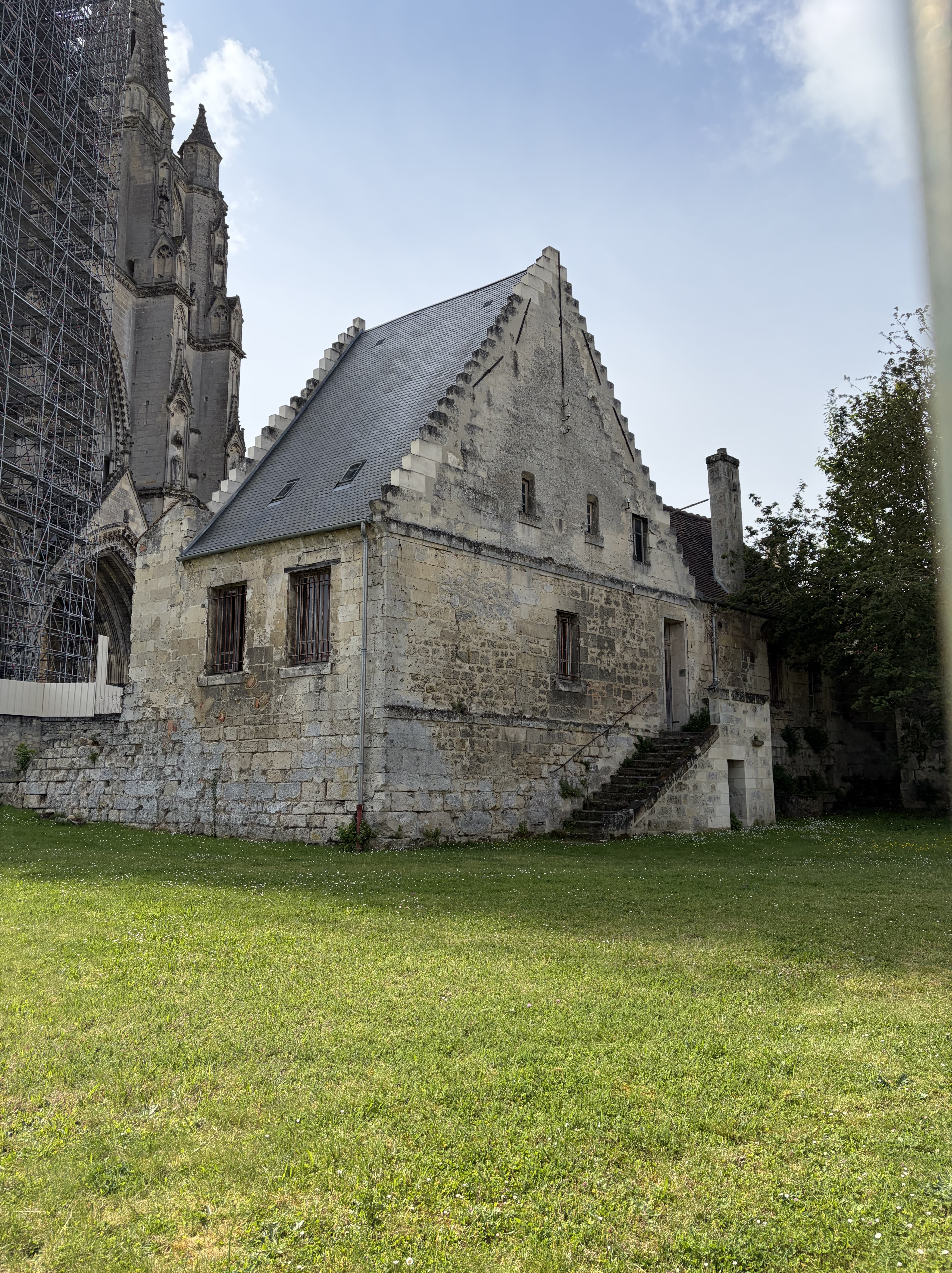
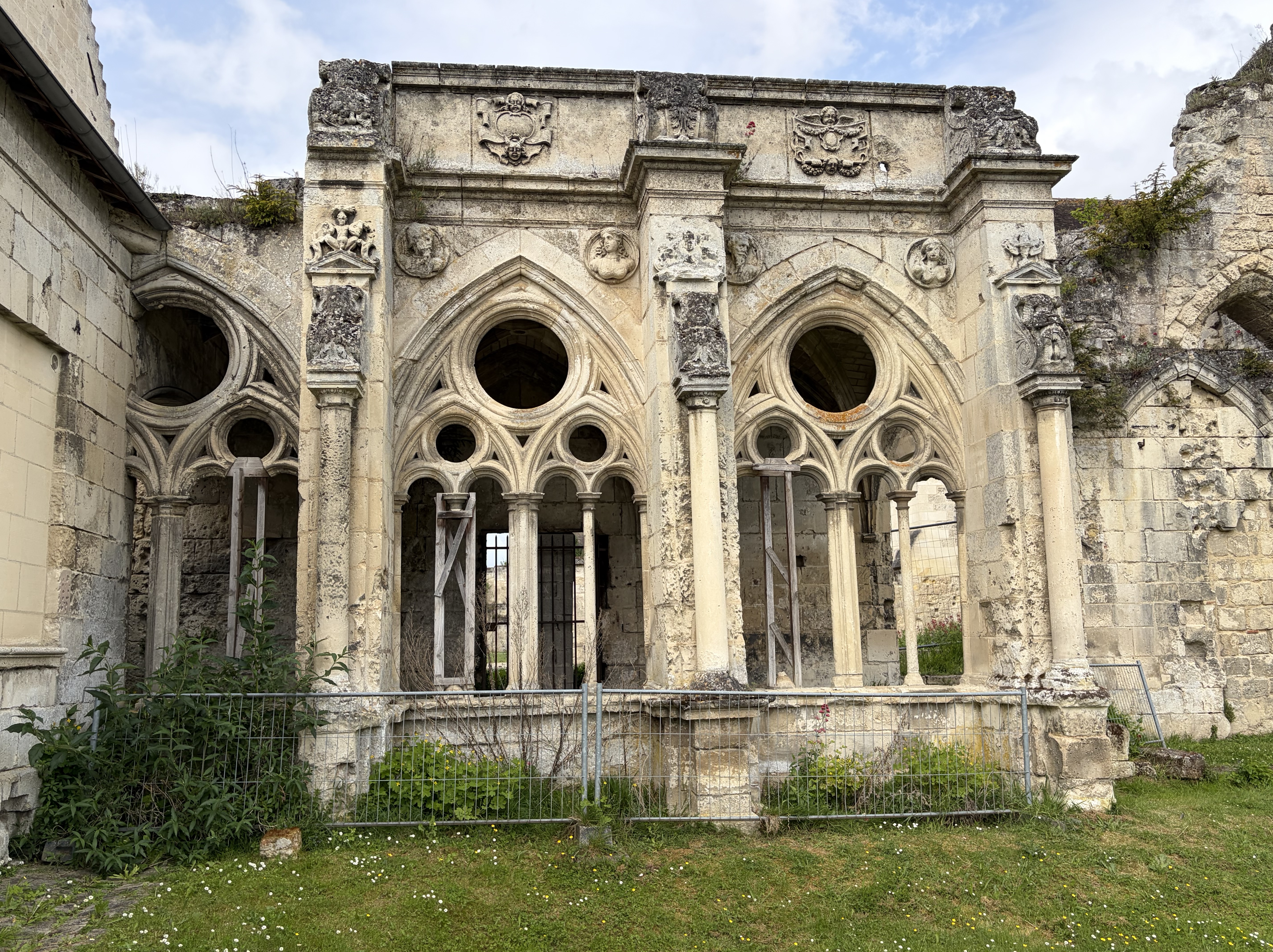
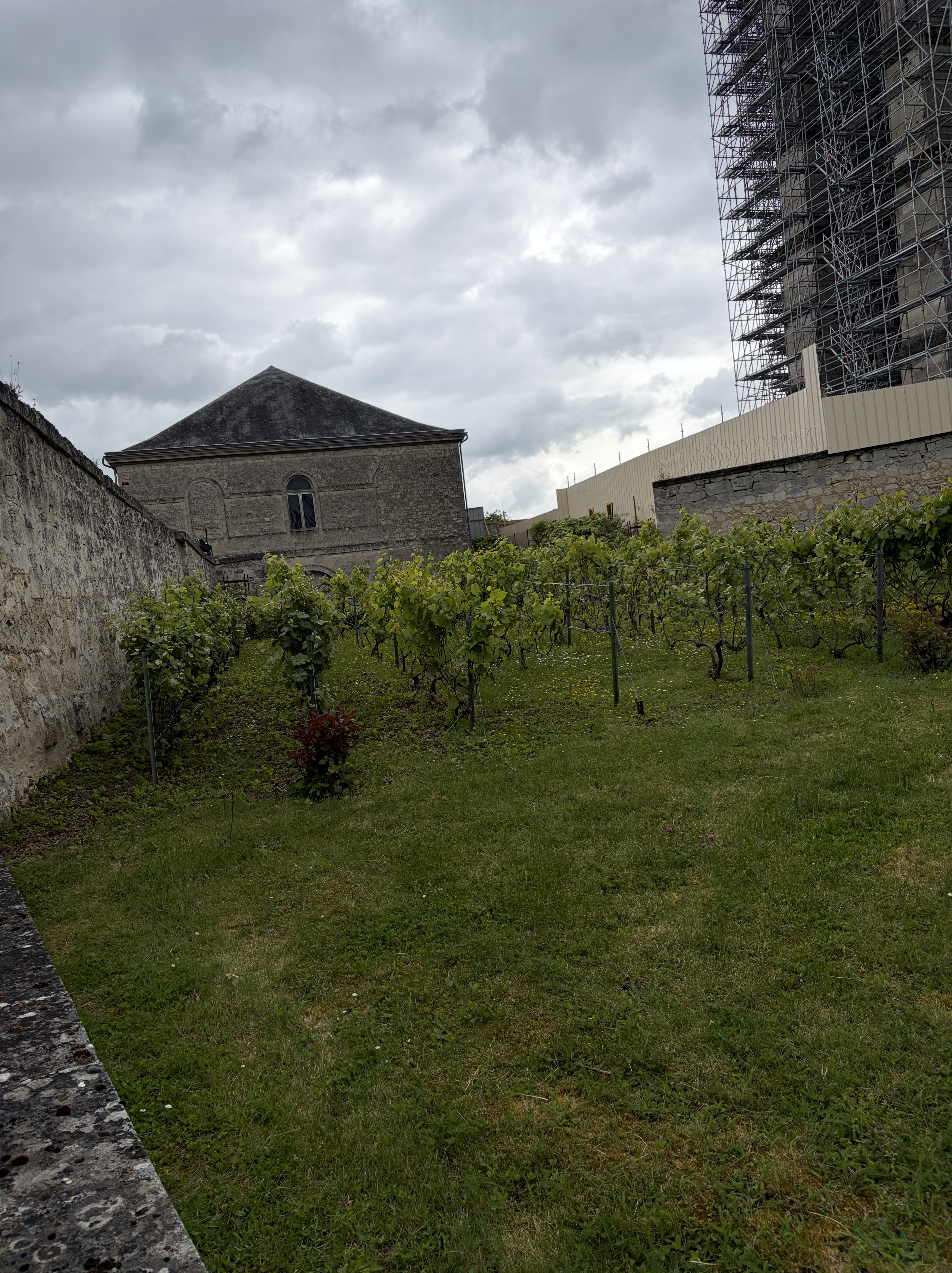
There is a small museum on site that explains the history and archeology from Roman through modern times.
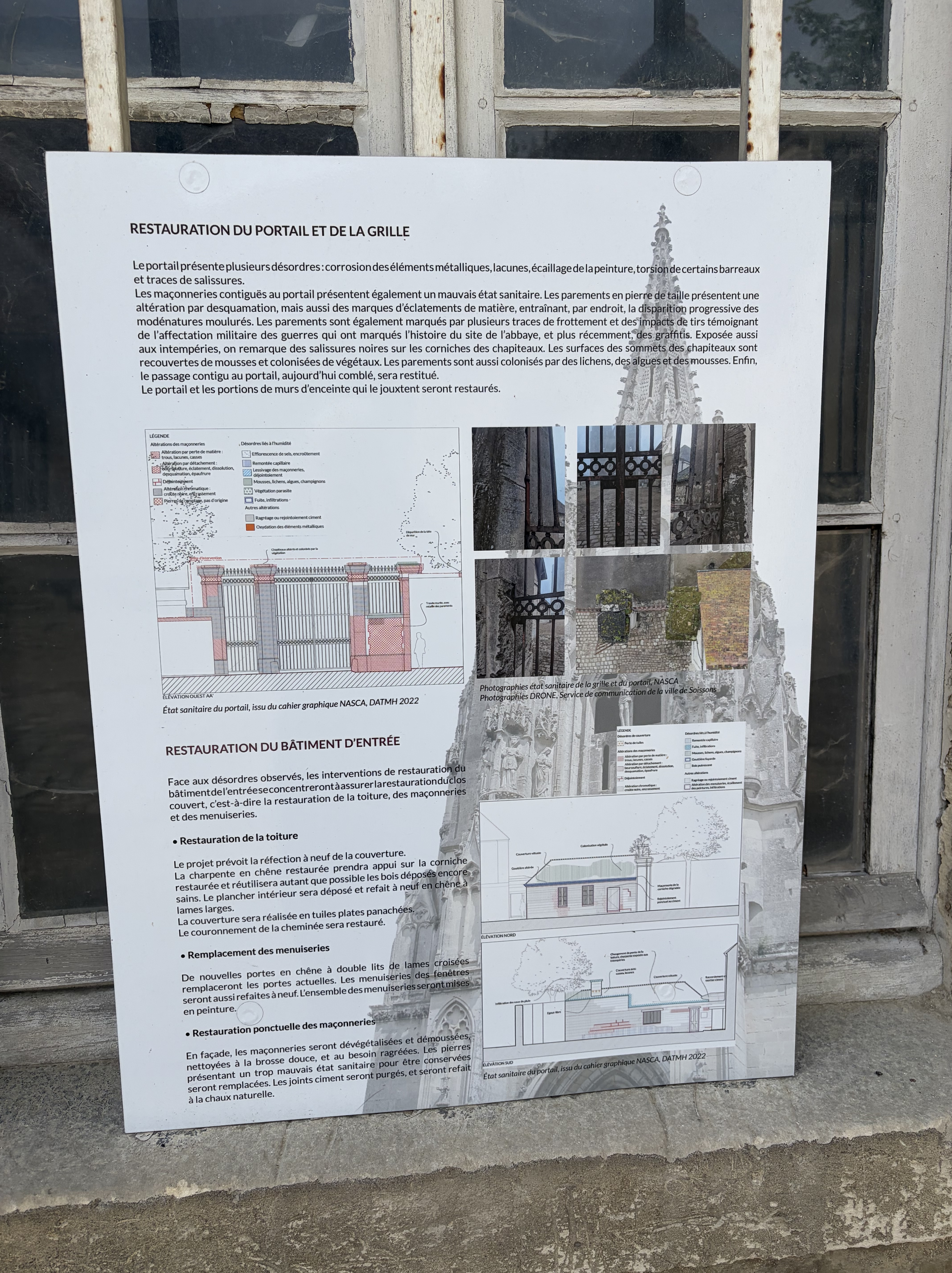
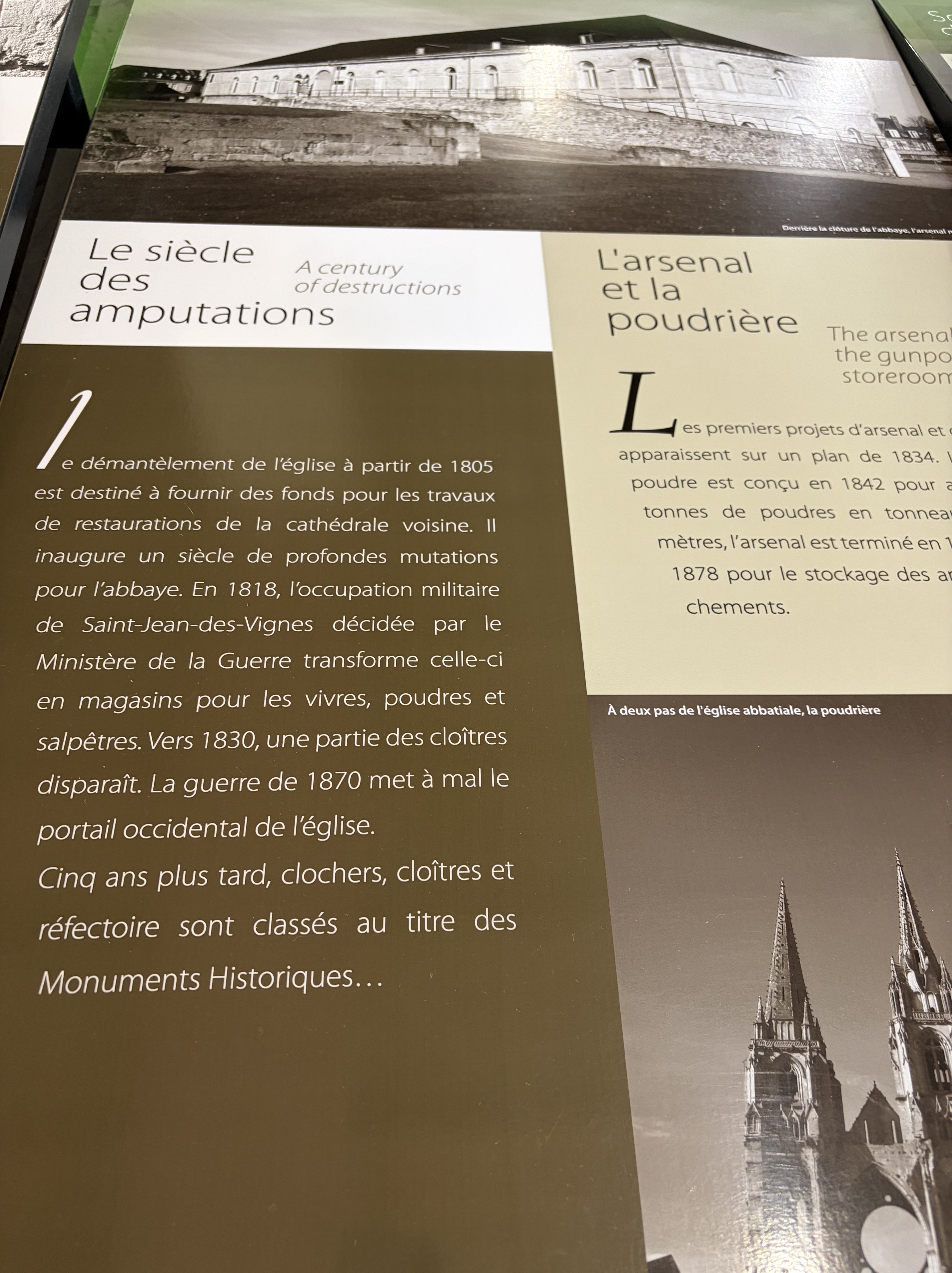
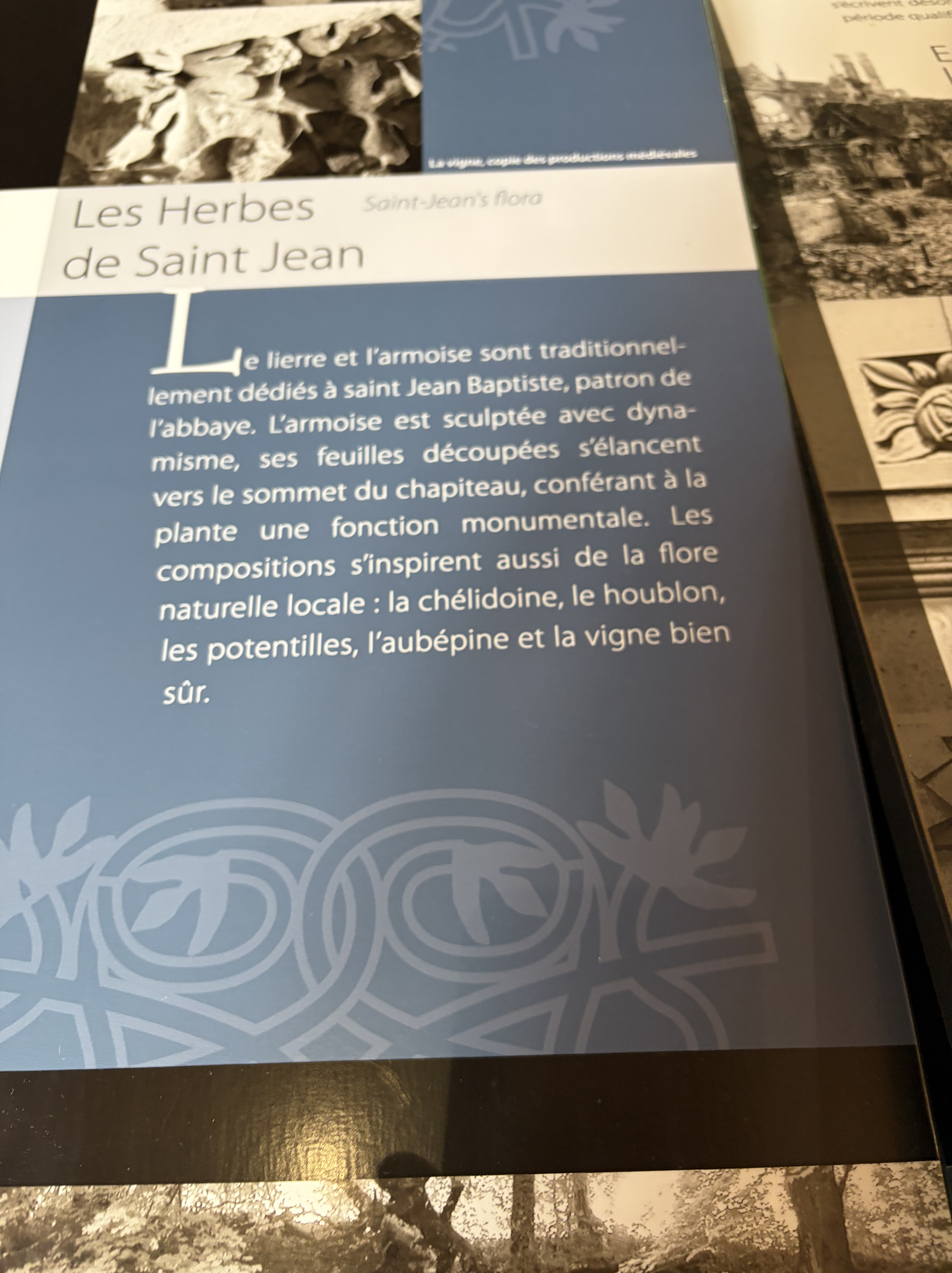
If you happen through Soissons, this abbey is worth exploring on your own. Even with the work ongoing with the scaffolding, there is a sense of this being a place of contemplation and thoughtful history.
Bonus Photo

We can’t stay around for the race. Tomorrow we are off to meet the Dauphin (the reluctant bridegroom) in Compiègne.


THANK YOU!
You’re welcome. and thanks for following me on this journey.
Ancient ruins, how cool is that
Very cool. I felt honored to see this ongoing work.