Today is Tuesday, May 5 and we are en route to Freiburg im Brisgeau. I read that Freiburg has the warmest climate in Germany. You would not have known that this day as it was overcast with a chilly drizzle. It is a busy city and after a day at Hofgut in the Black Forest, the city was initially an unsettling atmosphere.

Freiburg is our final stop in the Holy Roman Empire, now Germany. Maria Antonia’s last evening in the land of Empress Maria Thèresa was spent at the Schuttern Abbey. It no longer exists, so I am two days in Freiburg and exploring as close to Schuttern as possible.
Freiburg History
This town is more than 900 years old. It’s history is visible in the streets of the Old Town where a water system called the Bächle flows from the Dreisem River which starts in the Black Forest. It was developed as early as the 13th century and was used as a water supply until the 19th century when it was replaced with a more modern system.

The Bächle were moved to the edge of the roads in 1852 but are still open and visible throughout the old city. They are a point of interest for visitors like myself and the cool running water keeps the city comfortable on warmer days.
In more recent history, my walking route from the train station to my hotel passes by the University of Freiburg and through Old Synagogue Square. The synagogue was destroyed during Kristallnacht in November 1938.
The photo below shows Platz der Alten Synagogue, a public square with a reflective pool in the shape of the synagogue, built on the location of the former synagogue.

Maria Antonia’s Stay in Freiburg
My visit to the Freiburg Tourist Office was quite successful. One of the people on duty had done research on her stay. She knew the route of Maria Antonia’s entourage into the city, that the main street was named after the archduchess for a time, and where she stayed during her evening in Freiburg.
To find the house where Maria Antonia stayed, I followed a street map the tourist agent provided. When I saw the horse statue on the plaza, I was to follow the street to a fast food business. The house was Das Kageneck’sche Haus, the Kageneck were a prominent family in Freiburg.


So, as I understood, when the house was sold for a fast food establishment and other shops, there was an agreement that a plaque would be in place identifying the building. The plaque is in the above series of photographs.
So, we’ve found her lodging location in Freiburg (although the facade has changed dramatically), but how do I explore the following night, Wednesday, May 6, in the Schuttern Abbey which no longer exists? The Freiburg tourist office suggested I check with the tourist office in Offenburg, a nearby city located closer to the location of Schuttern.
I did just that. My second morning in Freiburg, I boarded a train for Offenburg (thank you, Eurail Pass). Their tourist office was helpful about the location where there are some Roman ruins adjacent to the former abbey location. A museum exists there and I could visit, but as it turns out, the museum is only open on Sundays. By Sunday, I will be several days deep in France.

To Offenburg in Search of Schuttern
So what happened to Schuttern Abbey, an abbey founded back in the 7th century by an itinerant Irish monk named Offo (and I thought I had wanderlust) which grew to become a Benedictine monastery, one of the largest in Germany? It was important enough that it hosted Maria Antonia’s last evening in the Holy Roman Empire.
The Reformation happened. Enlightenment happened. Securlarisation occurred in 1803, the abbey was dissolved in 1806 and torn down. After centuries as a powerful abbey, it ceases to exist a mere 35 years after Maria Antonia’s visit.
Why did other abbeys survive and Schuttern did not? I don’t know. But, supposedly, the tomb of Offo, the monk who founded the abbey 10 or more centuries ago, is located in the nearby church.
I debate whether to take an expensive cab ride to look at possible remnants of an abbey that no longer exists and a closed museum. I decide that I will hang out for the remainder of the day in Offenburg, a town that is full of baroque architecture and apparently bears Offo’s name.
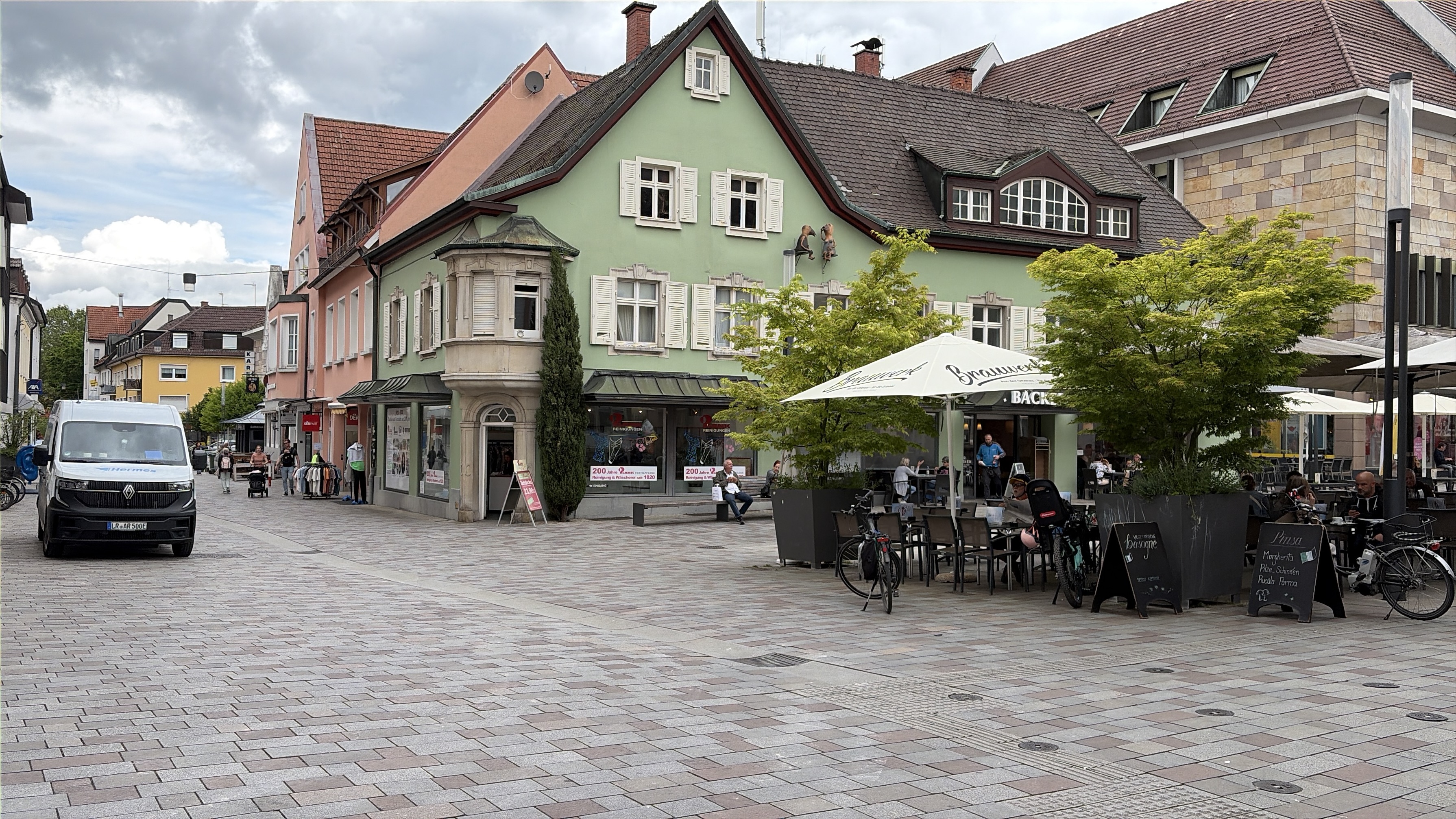
This is a pleasant city with numerous streets and shops to explore and many an outdoor cafe good for people watching. Following an enjoyable day, I’m on a return train to Freiburg.



Tomorrow, an important day: we’re crossing the border to France!

